a home for my content writing, journalism and let's call this blog
Flowers For Dave Morgan
Published 26 August, 2026 By
John Chacona
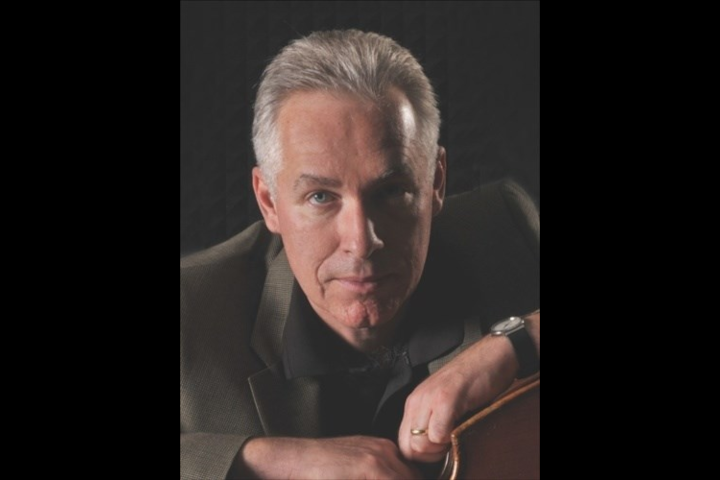
In the days following the death of Dave Morgan on August 15, the outpouring of love for the man has been overwhelming. Among the musicians on the Cleveland music community that I cover here, few, It seems, have been untouched by his influence in some way. A remarkable number have credited Morgan with changing the course of their careers and even lives.
I never met Dave Morgan. I got to Cleveland in late 2019, a bit too late for that. So what I know of him is through the testimony of others. Every time his name comes up in conversation, it is with a lot of gratitude, reverence, and even awe. To know the details of his career, his website is the place to start, and there’s an obituary that you can read here. But to really get the measure of musician and the man, it’s best to see him through the eyes of the people who knew him and whose lives were transformed by his presence.
It’s an honor to present some of them here.
Sam Blakeslee
He was just a remarkable educator. It’s 15 years ago that I stopped formally studying with Dave, and his ability to have you keep his thoughts and observations in mind is remarkable. We would joke about the Dave Morgan Stare: When you’d ask him a question, he would just look back at you, nod his head, and sometimes it would be minutes. Then he would say one thing and he’d be like, “Cool. See you later,” and you would think about that thing for a month or more I mean–in my case, 15 years. He was so careful about his words and so intentional with his words. There was nothing that was wasted.
Chris Coles
Something that happened in the last seven years, I think, really defines who I am now. It’s kind of been a running joke with Dave that everybody that studies with him all studies the same stuff, but no one sounds like each other. It’s not a joke, but it’s funny how that happens. It’s the mark of a great teacher.
He always had this way of showing you yourself—and not the you that you project, but the true essence of who you are, down to like the atom, and he didn’t try to teach outside of that. He didn’t force anything or his own projections onto you. [He] just put a mirror up to you and said, “This is who you are. Go for that, whatever that means.”
Kurt Ellenberger, pianist, composer and author
I met Dave Morgan in January 1991 when I started my doctorate at the University of Texas at Austin. Dave was finishing his master’s and beginning his own doctoral work. I walked into my first rehearsal with the UT-Austin jazz ensemble, and there he was on bass. We hit it off immediately. I quickly realized he was in an entirely different league as a player. He could play any style, any tune, any tempo, any key with complete confidence, accuracy, and a seemingly endless stream of creative ideas that flowed like a river.
He was the most natural teacher I have ever met. His love for the music was really a spiritual quest, and he honored that every day by sharing his unique perspectives on performing, collaborating, and composing with quiet, deep, and intense passion.
Dave was such an intellectual powerhouse that he could go in any direction and offer deep insights. After years of this, I started calling him “The Compass.” Whether the question was musical, intellectual, personal, or anything else, Dave always pointed me in the right direction. When my writing work met with some success, he tried to call me “The Compass,” but I would have none of it. (I jokingly signed emails “Compass Jr.” to let him know that there is only one Compass!)
Even in his final days, he was The Compass — still counseling and guiding me, still showing me the way forward without him. He will be sorrowfully missed. Everything he touched became better because of him.
Amanda Powell
He was my heartbeat and my anchor musically. So anytime that I’ve played with any ensemble since then, it’s the bass player that I go to, that I gravitate to because Dave and I had a language that that we could speak on stage without words. never lost touch with humanity and why we actually make music.
When people are grateful to him for his teaching, I think the thing that is unnamed is that he pushed his students to achieve their highest potential while seeing them as human beings, and recognized that we all do the best we can, and we are human and we have all these complexities. And so I feel that across the board, he was holding down a foundation, holding space, and also inviting creativity and improvisation, our highest potential.
Dave Renter, saxophonist and composer
From the moment I met Dave, it was clear he was a consummate artist, dedicated not only to mastering the bass but also to the crafts of music composition and arranging. One of the pieces we performed that night in 1997 was Dave’s composition, “Like Mike,” a tribute to Michael Brecker. I was in awe that a bass player could write something so compelling and so well suited to the saxophone.
Dave was a wonderful teacher and role model. I only had the chance to play with him once more, around 2003 or 2004, but the same level of artistry, professionalism, and dedication was evident then as it had been in 1997. For me, his influence extended far beyond the few occasions when we performed together. His impact on my playing and musical thinking has remained with me throughout my career.
Oh, how I would love the chance to play “Like Mike” with Dave once again.
Jack Schantz
I met Dave right after he moved back to Cleveland. I got off the road in 88. So it would have been late ‘88, ’89 . . . something like that. I had a band called the Jazz Unit, which was a small big band. He came to one of the rehearsals, and he brought some charts and they just absolutely knocked everybody out. He joined the band right then, right then and there. So from then on we basically played nothing but his charts. It was really good timing for Dave and for us too.
He was influenced a lot by Kenny Wheeler’s harmonic vocabulary, and his earlier work for the Unit was very much in that vein. But as time went on, I think he developed a much more personal compositional voice,. It was at once simple and complex it was at once acceptable and it was beautiful.
I came up with an idea that we could make a piece about the ideas of Gurdjieff and Ouspensky and my initial idea was to have four movements that would capture musically the four ways, namely the way of the monk, the way of the fakir, the way of the yogi, and the way of the sly man, and each one of those movements would be affiliated with a certain player. Dave took that concept and turned it into a nine-movement work based on the enneagram.
We were collaborators and kind of played off of each other. We had kind of a unique relationship. I don’t know what he was like with other people, but with me, he was very businesslike and very serious-minded and project-driven. In other words, we were working towards a goal with all the things that we did. We did four or five things–big things–together. And they were always kind of based on trying to get something done. It was very, very matter of fact.
Anthony Taddeo
When I decided to get my master’s degree, it was only because of Dave that I went to Youngstown State University. There was really nothing else. The thing that I admire most other than his humble and gentle spirit and his incredible talent was that he had such an innate ability to see the potential in people and to see what people can be, and he’d done that throughout his entire career. You [can] see that in people like Sam Blakeslee and Chris Coles, who he inspired to go down paths that maybe none of us would have seen on our own. And Alla Boara is an example of that because I didn’t see that as an option. [Dave] was such a perceptive human and was able to see the best in people, which I think is something that we need so much more of these days. It’s the greatest gift that a teacher has ever given me and I want to be like that.
Helen Welch
David was my mentor and he taught me so much with so few words. There was a point where I was ready to give up. My confidence was gone. David didn’t give me a lecture or a pep talk. He just said what needed to be said, quietly at exactly the right moment. His voice was the one that kept me singing.
That was David: understated, precise, generous. And yes, i called him David. I told him that in England we don’t shorten lovely names!!! He liked that.
This tribute to Dave Morgan began with Sam Blakeslee and I would like to end with something he told me in our conversation yesterday. I don’t think Sam would mind me saying that he said this with tears in his eyes. When he was done, I had them too.
There’s a quote from Bob Brookmeyer that says something like, “You have no idea what you’re going to do. how far the light you spread as a teacher will go. All you can hope is that your students pass it on.” We’ve performed a lot of music of Dave’s at the school and to see my students fall in love with his music and fall in love with his way of thinking and his way of being is a real testament to that [sentiment]. And to think that somewhere down the line, the students that I’m teaching at The Hartt School and privately or elsewhere will then share that information too creates this eternal sense of his memory and his legacy of just what a special and unique person and educator and thinker he was.”
Rest well Dr. Morgan, and thanks for the memories.
For the most complete listing of jazz and jazz-adjacent events, look to Jim Szabo’s essential, weekly Northeast Ohio jazzcalendar.
NOTE: This was written by a real human being. No artificial intelligence or large language models were used in its creation.
Contains information related to marketing campaigns of the user. These are shared with Google AdWords / Google Ads when the Google Ads and Google Analytics accounts are linked together.
90 days
__utma
ID used to identify users and sessions
2 years after last activity
__utmt
Used to monitor number of Google Analytics server requests
10 minutes
__utmb
Used to distinguish new sessions and visits. This cookie is set when the GA.js javascript library is loaded and there is no existing __utmb cookie. The cookie is updated every time data is sent to the Google Analytics server.
30 minutes after last activity
__utmc
Used only with old Urchin versions of Google Analytics and not with GA.js. Was used to distinguish between new sessions and visits at the end of a session.
End of session (browser)
__utmz
Contains information about the traffic source or campaign that directed user to the website. The cookie is set when the GA.js javascript is loaded and updated when data is sent to the Google Anaytics server
6 months after last activity
__utmv
Contains custom information set by the web developer via the _setCustomVar method in Google Analytics. This cookie is updated every time new data is sent to the Google Analytics server.
2 years after last activity
__utmx
Used to determine whether a user is included in an A / B or Multivariate test.
18 months
_ga
ID used to identify users
2 years
_gali
Used by Google Analytics to determine which links on a page are being clicked
30 seconds
_ga_
ID used to identify users
2 years
_gid
ID used to identify users for 24 hours after last activity
24 hours
_gat
Used to monitor number of Google Analytics server requests when using Google Tag Manager